From My End of Kampong Bahru
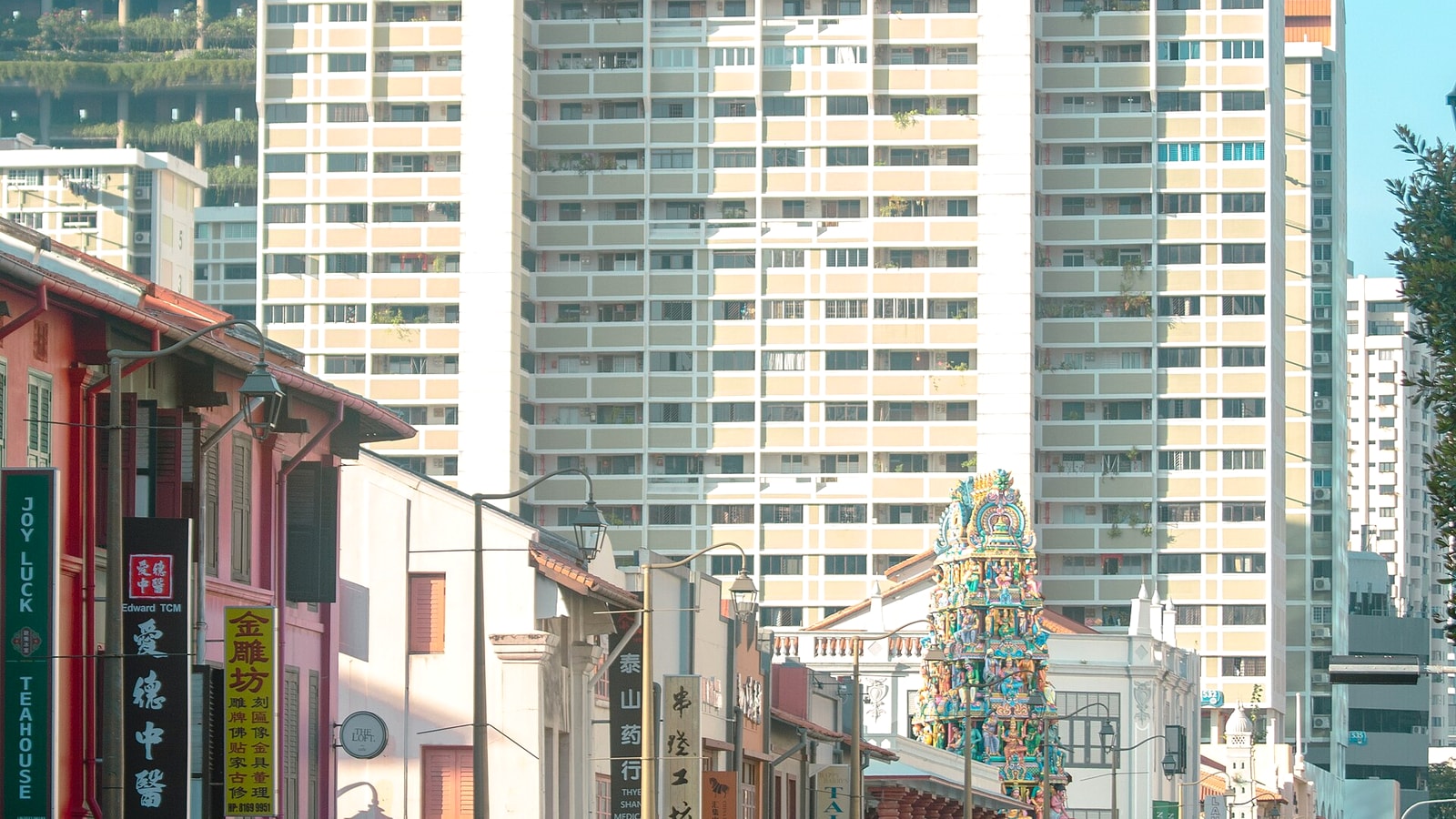
I leave my cousin's flat near Outram Park at half past six, which is later than I told myself I would. The lift opens onto a corridor that smells of someone else's dinner, and I take the stairs because the lift button has been sticky since August. Kampong Bahru Road is already in its evening shape: lorries nosing toward the port, a row of shophouses with their shutters half down, the footpath narrow enough that I walk single file even when I am alone. I have done this walk before, from her place to the bus stop and back, but tonight I keep going uphill because I said I would look, and because I have a note in my pocket that I wrote on the MRT and cannot quite read in this light.
The weather is the kind that sits on your collar. It rained around four, I think — the drains still gurgle — and now the air holds that warm wet thickness that makes your shirt cling before you have walked five minutes. The sky is not dramatic. It is a flat grey over the HDB blocks to the left, with a strip of pale colour above the rooftops where the sun gave up without announcement. My hair is damp at the temples. I did not bring an umbrella because the forecast said "partly cloudy" and I believed it the way you believe things when you are tired and already late. A breeze comes off the road when a bus passes, and for a second it is almost cool. Then the heat returns, and I keep walking.
Sound is what I notice most. Kampong Bahru Road at this hour is not quiet, but it is not loud either. There is the steady roll of tyres on wet asphalt, the beep of a reversing lorry somewhere I cannot see, a motorbike cutting through a side lane. Closer, my own footsteps on the uneven pavement, the rustle of plastic from a hawker stall bag tied to my wrist. Someone's radio leaks Tamil pop from an open window three floors up. A dog barks once and stops. I pass a group of men outside a coffeeshop, talking in the low comfortable way of people who see each other every day. I do not stop for kopi. I have a writing habit that says I should sit and observe, but tonight the habit only gets me as far as counting sounds: seven, eight, nine distinct layers before I lose track and start again.
From the bend near the old flats, I can see 51 Chin Swee Road in the distance — not close enough to read the numbers on the gate, but close enough to know the block. It is an ordinary tower, the same cream-and-brown cladding as half the city, with laundry on a few lines and one unit with a blue tarp over the balcony. On 12 November 2025, from here, I see what anyone would see: yellow tape at the ground level, not fluttering much because the wind has dropped; a few people in vests near the entrance; a small cluster of onlookers on the opposite footpath, phones held at chest height. I do not go nearer. I stand where the park connector meets the road and watch the building the way you watch something you are not sure you should be watching. Lights are on in many windows. Life continues above whatever is happening below. I think about my page — the blank one I meant to fill tonight — and how little I can put on it that I trust.
After a while, the stillness sets in, though the road is not still. What I mean is the stillness in my chest, the way your body holds its breath when you are waiting for information that has not arrived. The vests move slowly. Someone talks on a radio. A woman walks past me with groceries and does not look up. The tape stays where it was. I check the time on my phone and put it away again because looking twice does not change anything. I have been standing here twenty minutes, maybe more. The evening does not deepen into drama. It just gets darker. A streetlamp comes on with a faint buzz. I think of Simei, my own block, the void deck where the old men play chess — ordinary places that feel far away when you are standing on a slope looking at a building you only know from the news and from this angle.
I walk home the long way because I am not ready to sit in my flat and pretend the evening was normal. Down Kampong Bahru Road again, past the same shophouses, then toward the MRT because my legs know that route even when my head is elsewhere. The train is crowded in the way evening trains are — office workers, students, a child asleep on a mother's shoulder. I hold the pole and watch the tunnel walls. At Tanah Merah I change for the East-West line. By the time I reach Simei it is past eight. I buy nothing at the hawker centre. I climb to my floor, unlock the door, and leave my shoes by the entrance where I always leave them. The flat is quiet. I make tea I do not drink. I open my ledger on the desk — the same one I use for everything, grocery lists and stray sentences — and write the time I got home. That is all I write for now.
I am honest about what I do not know. I do not know what happened inside 51 Chin Swee Road beyond what will be reported later by people whose job it is to report. I do not know the names, the sequence, the why. I only know what I saw from a distance on an ordinary Tuesday evening that turned into something I will remember the way you remember weather that broke wrong. I organised my week around this visit to my cousin and this walk, and the walk did not give me answers. It gave me tape, vests, laundry on a line, and the feeling that I should not turn it into a story before I understand it. I may never understand it fully. I put the note from my pocket on the desk beside the ledger. Tomorrow I will read it in daylight. Tonight I leave the page mostly blank, which is also a kind of record — SGT past nine, fan on, city humming through the window, and me here, tired, exact, unwilling to pretend I saw more than I did.