Second-Last Train
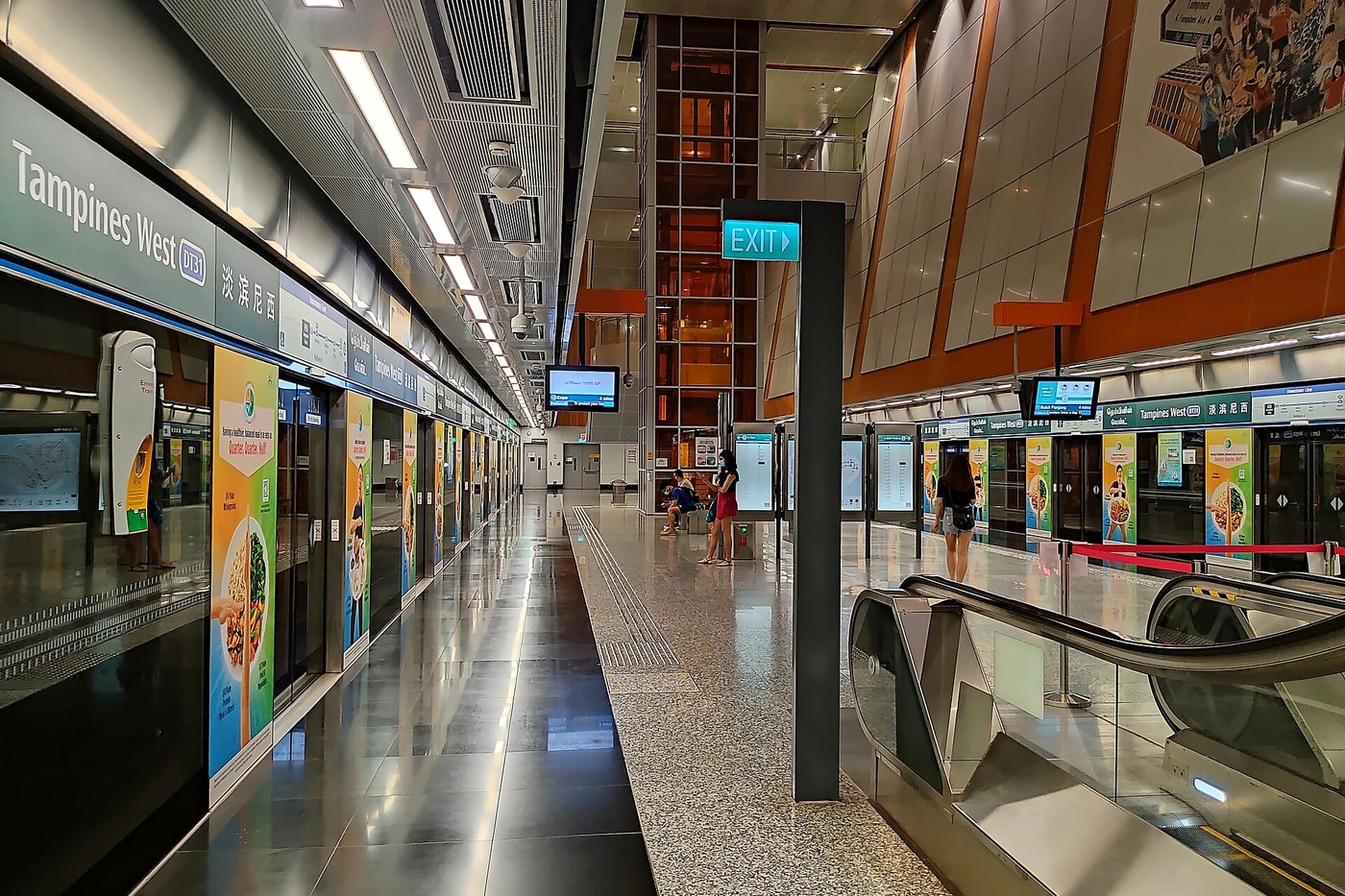
I missed the train I meant to catch and arrived at Simei station in time for the second-last eastbound service, which is a different crowd entirely from the rush-hour crush. The platform was half empty — a few students with backpacks slung on one shoulder, a man in security uniform reading something on his phone, an elderly couple sitting on the bench by the map with a grocery trolley between them. The clock on the wall said 11:07. The air-conditioning was too cold, as it always is on the platform, and I stood inside the yellow line with my arms folded.
The second-last train is not late-night empty; it is the hour when people who stayed out one hour too long meet people who started early and are already tired. I was the first kind. Dinner at my cousin's in Tampines ran long because we talked about our mother's medication schedule and nobody wanted to be the one to leave. By the time I reached Simei I had already changed twice and walked from the bus stop in a hurry that accomplished nothing because the train does not wait for your family obligations.
When the train came, I boarded the middle car out of habit and found a seat near the door. A woman across the aisle slept with her head against the glass. Two boys whispered about a game I did not recognise. The announcer voice was the same recorded calm it always is: "Next station, Tanah Merah. Please mind the platform gap." I watched my reflection in the dark window and looked away because I did not need to see myself looking tired.
At Expo the car emptied slightly. At Tanah Merah more people got off than on. By Bedok the platform outside was nearly bare — one cleaner pushing a cart, one late runner who did not make it and stood hands on knees. I stayed in my seat because Simei was two stops away and standing seemed unnecessary. The man in uniform got off at Simei before me, nodded at the staff member by the escalator, and walked toward the exit I never use because it lands farther from my block.
I took the stairs instead of the escalator, as I often do when the station is quiet and my legs need the stretch. The void deck was dim — half the fluorescent tubes off to save power after midnight, I assume. A cat crossed from the letterbox cluster to the bicycle rack. My flat was six minutes away by foot, seven if I stopped at the vending machine, which I did not. The key turned in the lock with the same sound it has made for eleven years.
Inside, I did not turn on the main light. I used the kitchen switch, filled the kettle, and sat at the table while the water boiled. The MRT ride had been unremarkable — no delays, no incidents, no conversation worth recording except the boys' whisper about the game. And yet the second-last train hour feels distinct in memory, the way a specific temperature feels distinct. It is the hour when the city thins out and you realise you are part of the thinning.
I wrote the time in my ledger: 11:34, home. One paragraph about the elderly couple on the bench and their trolley with the red handle. I wondered where they had come from and where they were going, then caught myself inventing a story and stopped. I do not know their names or their destination. I only know they were there when I was there, on a platform that would fill again by seven the next morning as if this hour never happened. The second-last train is proof that the MRT runs on a schedule even when your life does not. I find that comforting in a dry, exact way — not warm, not cold, just true.